Sunday, December 13, 2020

The rose fence and winter cleanup


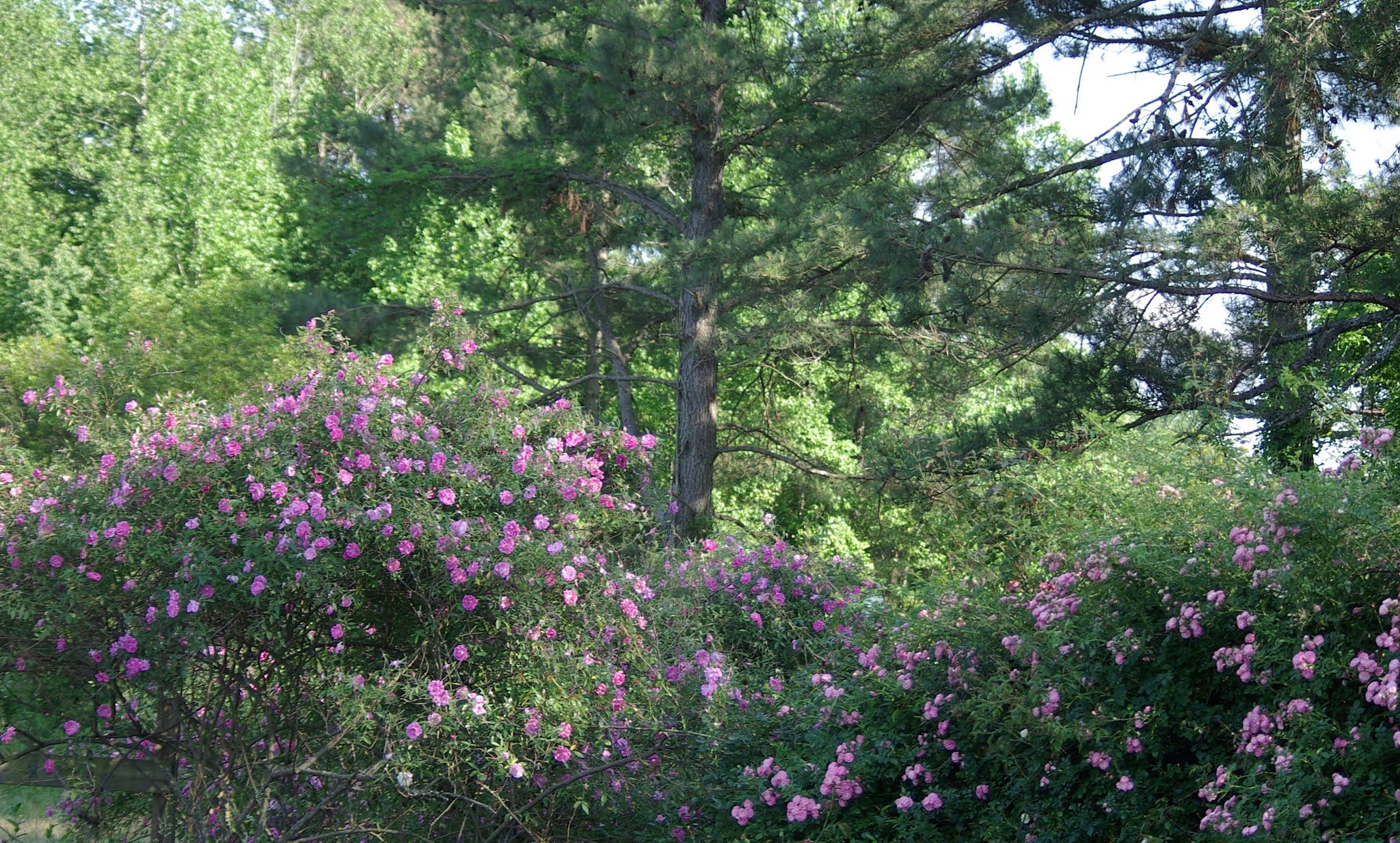
There's a gate across the drive outside the pasture, and a line of fence that runs from there to the edge of the woods. The gate and the fence are to keep the horses from running up the driveway if they were to somehow get out of the pasture. "The rose fence" is a place for roses that are much too large to grow on a standard trellis. In the beginning, 'Mermaid' was the only rose on the fence. It grew in the part shade of a pine tree and I quite liked the butter yellow flowers in spite of the incredibly vicious thorns. Then the pine tree started to list dangerously to one side, undermined by the fast-moving water in the ditch that runs between the gate and the fence. Now in the full sun, the flowers faded to buttermilk white, which I didn't like as much. Then the rose contracted rose rosette disease and had to be removed. The rose was so large I enlisted DH's help to get rid of it.

Then I acquired what was supposed to be 'Seven Sisters' in a trade, but which turned out to be what I think is 'Dorothy Perkins'. DP looks much better growing on a fence rather than on the ground (where it grows wild along the roadsides here), as it doesn't contract fungus there.

'Dorothy Perkins'


Swamp rose and 'Dorothy Perkins'


I grew a rose from cuttings that grew behind the Glen Lennox shopping center in Chapel Hill and had admired for years, ever since I saw it there when I was in college. (The drive through for the bank there is at the back of the shopping center.) That rose turned out to be 'Alberic Barbier', IDed by another blogger when I posted about it.
'Alberic Barbier'


This area is a mess right now, as I haven't gotten in there and cut down the woody plants and blackberries that inevitably grow up around the roses for at least a couple of years. Things like Chinese privet, sweetgums and red maples grow fast. I'm going to need to get in there and clear out the briars and saplings so G. can finish cleaning up with the chainsaw.

I ordered 'Rambling Rector' after seeing it on Phillip's blog Dirt Therapywhen he lived in Alabama.
There are reasons for this neglect. Three years ago we had to start soaking the horses' hay because the pony has insulin resistence. Too much sugar in insulin resistent horses results in inflammation in the soft tissues of the foot, a condition known as laminitis. No one knows why the feet are affected but it's a serious and painful condition. If there's too much damage to the soft tissues (called laminae) that attach to the hoof capsule, the laminae can start to die and the hoof capsule separate from it. Typically this first part to detach is the toe, causing the hoof and bone to rotate downwards, a condition known as founder. In catastrophic cases the entire hoof capsule separates from the laminae, which is called sinking and is very difficult to recover from. Soaking the hay for half an hour reduces the sugars. This process adds about an hour to taking care of the horses each day, so that cuts into my gardening time, but the pony is more than worth it. We've had her 20 years and she's a very sweet pony. She has overall been doing well and is sound.
Because I'm a sucker for anything purple, I also ordered a purple rose whose name escapes me now.
I can't find it in my garden folder, or on my blog. Last time I checked there was stil a tag at the
base of the rose, so perhaps I'll find it again after clearing.


Gene's responsibilities at work have increased. He used to take care of the horses Friday night but I need to do it now because he's too busy. The third reason is fibro, which is always worse in winter. However, I've been able to make changes that have made the condition much better and I hope that continues into the cold wet weather season.

Unknown wildflower at base of roses - some sort of campion?


I spend all winter trying to clean up messes that have grown up over the summer as best I can. I don't want to clear places where birds are nesting and they always build nests along the rose fence, as there is excellent cover there (especially these past couple of summers lol). So winter is the time to work on stuff like this. Plus layers help prevent scratches from thorns - thorns from blackberries and the roses. On Saturday I worked clearing briars for nearly 2 hours, to be rewarded with the site of a lot of deadwood. The roses are not dead, because 'Alberic Barbier' is still throwing canes everywhere, but it might mean more cleanup after clearing all of the blackberries, saplings and trumpet vine. This is going to take some time.


Monday, December 7, 2020

Plans for the vegetable garden


The past few years my role in the vegetable garden has consisted of watering the plants and tending to the ornamentals around the edge of the garden. It's a role I am getting a little tired of to be honest. I feel like I'm watering more failures than successes. I think we should give up trying to grow any tomatoes, for instance. We have some sort of rampant mutant wilt here that takes down every tomato except for Matt's Wild Cherry, and even that refuses to grow in the vegetable garden. We can't seem to grow any other tomatoes very well here, no matter where we plant them. In the ground, in pots with brand new medium, it doesn't matter.

I used to start the plants from seed but Gene took that over. He wanted to start them inside early. I don't think there's any advantage to doing that, as I used to do it and found the plants were better if I started them outside in pots on the front porch after the last frost. But he wanted to do it. If I start them this year (likely basil, eggplants, and peppers), I'll just start them outside on the front porch in small pots.

There are too many plants in pots in the garden itself. I want to grow Kentucky Wonder pole beans on the back trellis, no pots. G. put them in pots and I just could not water them enough to keep them happy. We have plenty of chicken wire to keep the rabbits from eating the stems. Sweet peas before that posssibly. No lima beans. They have never produced here. It's a picky crop, often sensitive to moisture levels. The variety we had this year just grew and grew and grew and only produced tiny little pods that never matured.

I want to try corn again, although somehow that's only been successful once. How hard can corn be to grow? I don't know but this is one past failure I want to try one more time.

In 2011 we grew corn
The front trellis needs to go or at least the pole needs to be shored up or replaced, one of them is listing markedly. It can only be used for early sweet peas, otherwise it shades too many other things out.

Sweet peas on the back trellis


Peppers probably don't need to be grown in pots because they are water hogs. Basil and eggplants do well in pots, and we have to grow sweet potatoes in pots due to the voles.

This year I really want to make notes on my calendar to start fall crops from seed or buy them to get them established before cold weather arrives. Broccoli from the garden is often better than broccoli from the grocery store, and Buttercrunch lettuce is amazing mixed with romaine in a big salad.

Asparagus has done well but Gene has never harvested any of it. It might have been overgrown by seashore mallow by now. Seashore mallow has a way of taking over areas but is easily dug if we need more room.


Gene grows squash and okra on the compost pile since they get so big. That worked out well this year since we had frequent rain.

OTOH, Veilenchbleu and swamp rose has done well at the edge of the vegetable garden. I've always thought that growing flowers was easier than fruit and vegetables. Everyone wants to eat crops and they've been bred more for productivity than disease resistance. Still, I think there's more we can do to figure out what consistently does well here and stick more to that. I don't even know the particulars of what each crop needs, and and if I knew that would probably/possibly help. G. wants a vegetable garden but is too busy to concentrate on it much.

In 2009, one year after we moved the house, the area next to the vegetable garden was so open, and the swamp rose planted there was so small. There was a lot of Gulf Coast Penstemon, a short-lived wetland perennial perfect for that place since it gets wet from all of the water running down the driveway.


Now the swamp rose is full size, at least 7' in height.


Then two Veilchenblau were planted and they've gotten pretty big too.


Next to where we park the cars are Verbena bonariensis and small beardtongue (sent from Gail of clay and limestone)
and (not pictured) daylilies that form large vigorous clumps like 'Hyperion' and 'Blackjack Cherry'. Between the parking area and the vegetable garden are (also not pictured) cup plants. I wanted some of these after seeing them covered in butterflies at the NC Botanical Garden. This past year the swallowtails hatched out too late for the flowers, but the year before that the cup plant and summer phlox were absolutely covered in butterflies. A plumber came out to fix the leaky hose bib on the well and he and his daughter were impressed by all of the butterflies. I grew some parsley and bronze fennel for the black swallowtails and had to go and buy more as the caterpillars just devoured the plants.

Between the driveway and vegetable garden there's bee balm, a hibiscus, crinum
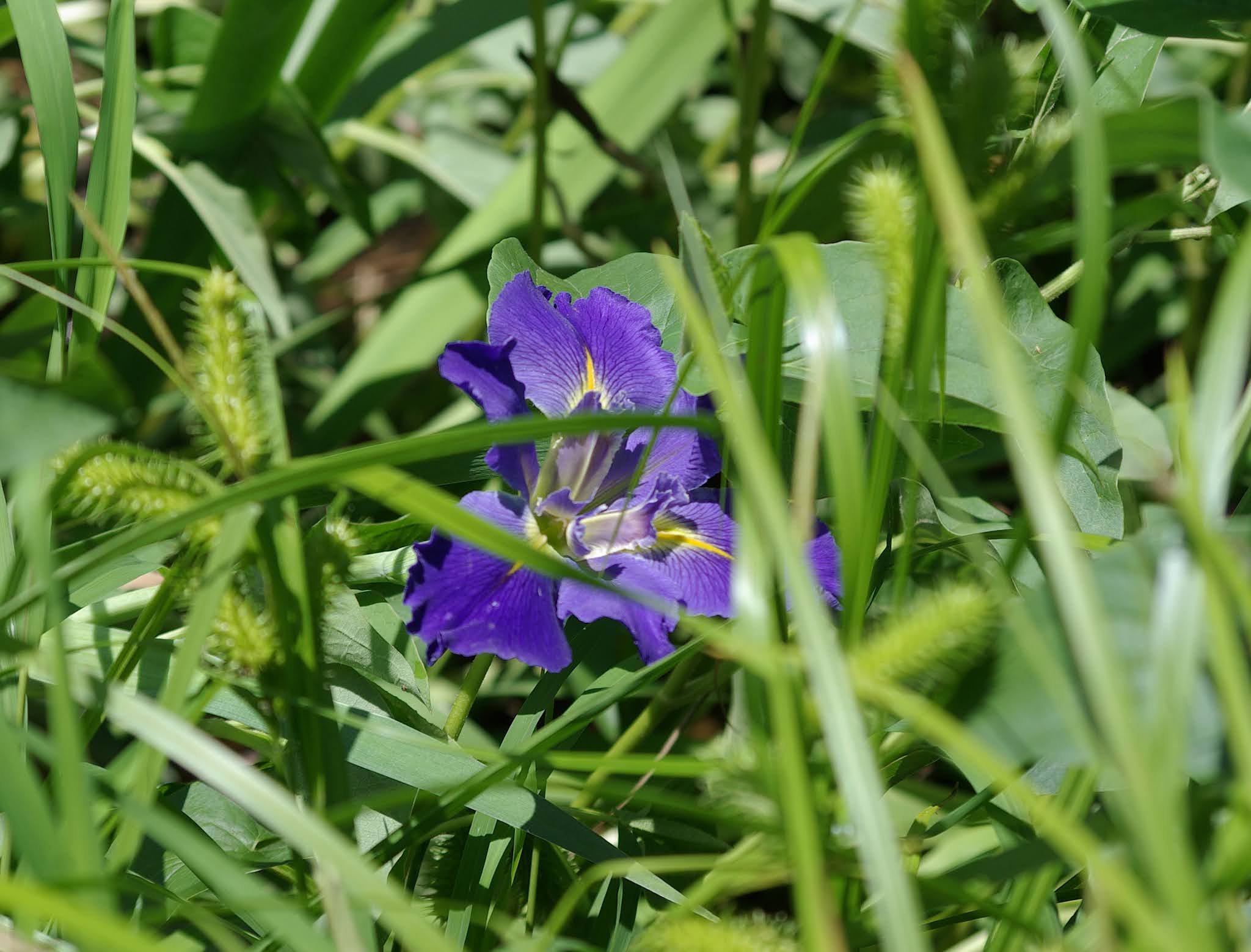
and iris. I've got a few Louisiana iris and blue flag there

'Sinfonietta'
but I'd like to get a colony going, as well as more Gulf Coast Penstemon again. I've got more around that I can grow from seed.


Tuesday, December 1, 2020

Wildflower Wednesday


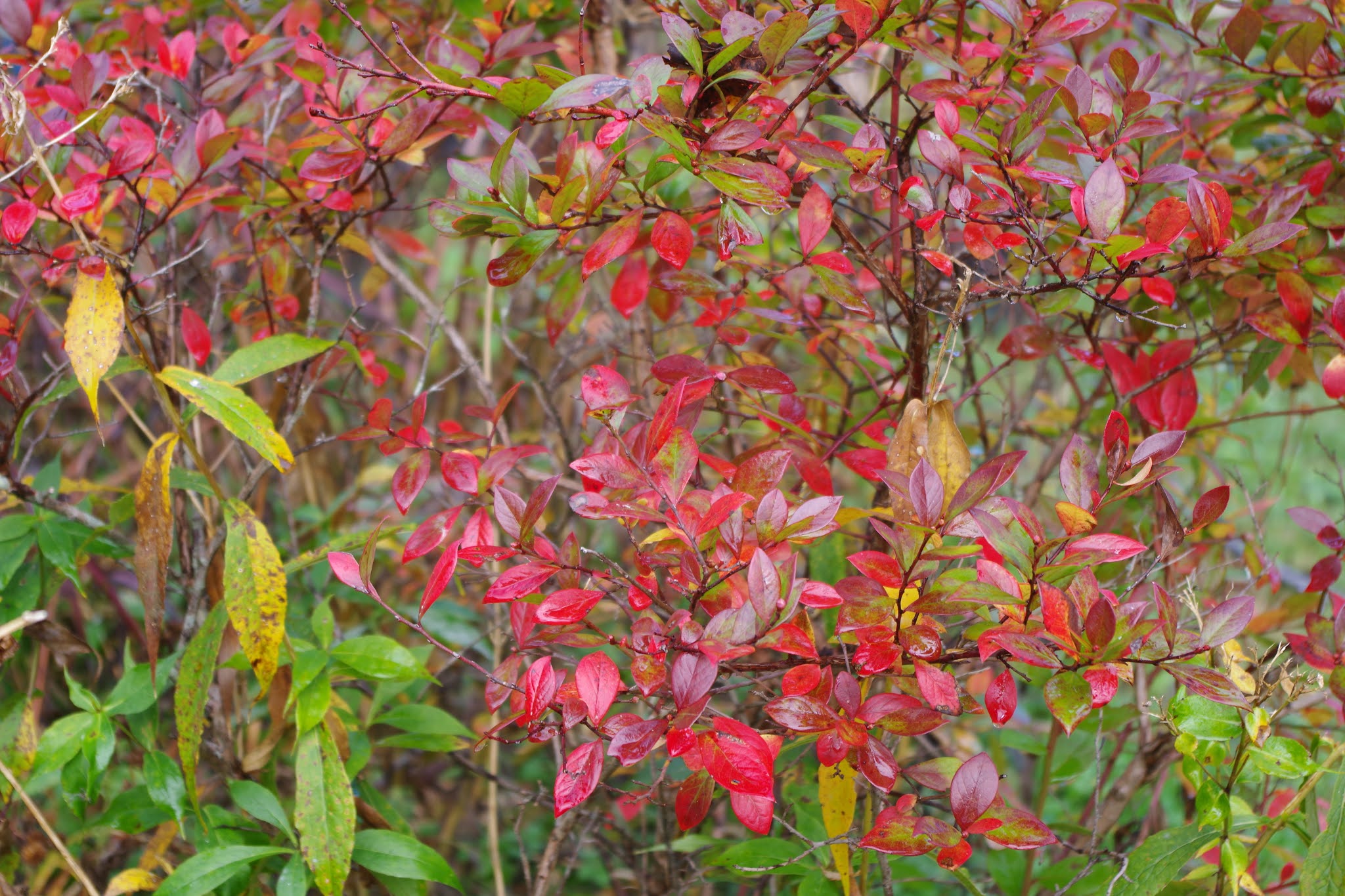
Even when the big trees disappoint, when the leaves are ripped off by wind or rain as happened this year, there are always late pops of color, whether it be from adult trees inside the woodland edge, young trees that are likewise sheltered from the wind (and are more likely to turn brilliant shades of red compared to their older counterparts), shrubs like blueberries, and even the fall color of some perennials. That combined with the green gold shaded landscape of November and December always makes for a beautiful fall, especially when it's lit up with the golden light of early morning or late afternoon.
I wanted to join Wildflower Wednesday even though the only things in bloom in my garden currently are a couple of Camellia sasanqua and a few very late swamp sunflowers, so I'm opting to show the last of the fall foliage instead. As Albert Camus famously said "Autumn is a second spring when every leaf is a flower."
Most of the highly colorful trees here are red maples. They turn any color from yellow to orange to red, and can even sometimes rival sugar maples.

The golden leaves of a sweetbay magnolia.

The swamp cyrilla seemed to have turned red and orange
overnight. The most reliable small tree for fall color here.

My St. John's Wort is actually coloring up this year! I've always looked at the spectacularly colorful ones at clay and limestone with envy.
If you look closely you can see that there are two blueberries. The one in back is a wild volunteer at the edge of the woods near our mailbox, the one in front I grew from a cutting. The blueberry in front has done spectacularly well. Most of the blueberries I grew from cuttings and put in a garden setting are half the size, if that. Most of the blueberries on the farm and indeed the area (according to the NC Botanical Garden) are Southern black blueberries, although we have a lone highbush blueberry too.
'Sunshine Blue' crowded by summer phlox and swamp sunflower. Freezes often kill the leaves before they can fully turn because it receives too much shade with the house blocking the sun low in the southern sky. It produces delicious very sweet berries when frost doesn't get the early flowers. It's probably too big to dig now so I'll try to grow more from cuttings, as I think this could make a beautiful small shrub for fall color if grown in more late season sun.
Fothergilla 'Mt. Airy with 'Sunshine Blue' in the background and a blackgum in the far background.

Like the blueberries, Fothergilla x intermedia 'Legend of the fall' starts out dark burgundy and turns bright red.

Muhlenberia filipes is still showing a little bit of its purple color and will look good through most of the winter. Bonus: photobomb by Prince

Thanks to Gail at clay and limestone for hosting Wildflower Wednesday.
 
Related Posts Plugin for WordPress, Blogger...