Monday, February 23, 2009

Old Friends Part I


Gail at Clay and Limestone asked which plants we couldn't garden without. I have to have Bearded Iris. A close second are the native plants which we've found growing wild on the farm.

The garden has a lot to compete with. At first it looked like pitiful clumps of flowers stuck in the ground with the real show of lovely green pastures and woods and more fields beyond it. The garden has developed so that it's part of the landscape now, although it is still clearly unfinished.

There are natural areas on the farm that are like a garden, especially where there's a lot of moisture. Oceans of Bidens, pools of Gerardia, streams of river oats. The peak of bloom here is in the fall, but there are beautiful spring flowers too.

We don't have common blue violets growing wild here, but we do have early blue violets (Viola palmata) and marsh violets (Viola cucullata).

Although it's not very evident in this picture, V. palmata closely resembles a bird's foot violet both in flower and leaf form. Don't let its delicate appearance fool you -- this is a very very tough plant. It thrives in hardpan subsoil clay, next to swiftly flowing water, poor soil, rich soil, sun, shade -- the only thing it can't tolerate is crowding by taller plants.


Marsh violet comes in white with blue veining, blue, lavender, and purple. Although small, even for a violet, it's very floriferous. It loves wet places.


Chokecherry (Aronia arbutifolia) grows wild by and even in the ditch that runs by the old house site. It's so tall and slender that it's practically invisible until it blooms. The dusky mauve stamens and pink buds make the single white flowers uniquely beautiful.


We have several serviceberries (Amelanchier arborea) around. The largest one was unfortunately pushed over when the original house site was cleared for construction. It survived and flowered for a few years even in that state. When it bloomed it looked like an extravagant bridal veil. The leaves, fuzzy and silvery when new, are almost as beautiful as the flowers when they emerge.


Southern black blueberry is one the earliest native shrubs to bloom here. Its only requirement seems to be acid soil with an organic component. I've seen it growing in sandy loam, clay, wet conditions, dry, sun, and shade. It gets very large here, up to 10 feet tall and over 6 feet wide, eventually suckering 20 feet from the center of the original plant. It often has amazing fall color that persists until very late in the year. There are some specimens here that turn a beautiful pure red, even with a good amount of shade.


We have a couple of mature Eastern redbuds growing wild here, very venerable trees that look to be much older than the maples and pines surrounding them. These flowers are actually from a tree from the National Arbor Day Foundation, as they were much easier to photograph.:)


Down by the creek the most common small trees are possamhaw (Ilex decidua) and hawthorns. The hawthorns look like Greens and Parsley Leafs. They line the path next to the creek and also occur in wet areas between the horse pastures. I haven't had any luck yet growing possamhaw from seeds or cuttings, but I've started both kinds of hawthorns from seed. The seedlings have been planted next to the woods that border the path from the old to the current house site.


I have found this Amsonia growing in a number of places; in shaded sloughs, open woods, and floodway fields. The beautiful blue-green foliage tends to yellow and the pale blue flowers to get lost in all-day sun, but it's amazing with some afternoon shade.


As is this delicately colored Geranium that my husband found growing next to one of the pastures. Since its fate was to be mowed if it remained there, I moved it to the garden, where it has multiplied like crazy. It's not aggressive at all, just forms big clumps that look like bouquets in the spring.


Thursday, February 19, 2009

Blooming Friday -- Second Favorite Garden Center (NCBG) Part III


Rather than put up practically the same pictures I put up on Bloomday, I've decided to continue with the Botanical Garden posts and plants that I grew from seed received from the Garden.

Small's beardtongue (Penstemon smallii) is a lovely short-
lived Penstemon that prefers dry half shade. I love it. It's very showy.


One plant can form a very sizeable clump.


Butterfly Weed is a plant that I can only grow from broadcasting the seed. I know it's transplantable when small, but I still haven't had any luck with growing it in pots. So I broadcast the seed (fresh has worked best for me) and it always comes up.

Bees and butterflies love it, and the flowers create such a bright spot in the garden.


Tall skullcap (Scutellaria integrifolia) grows wild here, forming colonies beside the woods and in ditches. I've transplanted some into the garden and enjoy its beautiful lavender-blue flowers in May. The Garden also sometimes sells Heart-Leaf Skullcap (Scutellaria ovata) and Hoary Skullcap (Scutellaria incana).

Scutellaria integrifolia


S. ovata, which has broad fuzzy gray-green leaves, blooms a month later in June.


Scutellaria incana blooms last in mid-summer. This one is tall (for a skullcap -- about 2 feet high) with shiny silvered leaves. It tolerates dry half-shade very well. All of the skullcaps repeat some until winter cold shuts them down.


I first read about pineland hibiscus in the Wasowski's book Gardening with Native Plants of the South, which Sally Wasowski described as having "gorgeous flowers, which range from palest yellow to rich cream with an unusual pleated texture, scalloped edges, and velvety red centers." Who can resist such a description? The flowers more than live up to expectation, by the way. H. aculeatus is a small hibiscus, the only one I have that prefers dry conditions, and while never covered in flowers it throws some blooms all summer and fall. The foliage is unusual too, highly divided and with a wonderful rough texture.


Dotted Horsemint has a certain understated elegance. There's something about the combination of pink and green and the way the flower is put together that really captures the eye. The foliage has a smoky musky fragrance.


Hibiscus coccineus is gorgeous -- a bit tall and gawky, but still gorgeous. Unfortunately its color doesn't agree with the rest of my garden, so it's been relegated to the pond in one of the floodway fields. This hibiscus can grow with its roots under water year round.


American beautyberry has beautiful fruit. It's even a very handsome shrub when pruned every spring, although it often ultimately assumes a rather octopus-like habit by fall. I like it best mingling with other plants.


I got one plant from my packet of aromatic aster seeds (the rest rotted). From that one plant I probably have at least 2 dozen divisions. IMO this is probably the perfect aster: it's low-growing, well-behaved, and a very exuberant late bloomer. True to its name it has sticky foliage that has the sweet scent of pine sap.


I have a swamp sunflower from Niche Gardens, and then this more delicate swamp sunflower from the Botanical Garden. This has much narrow leaves and may prove to have more healthy foliage, although it will have to be in my garden larger than a year to prove that. The flowers really glow and are the ultimate eye-catcher.


Thanks to Katarina at roses and stuff for hosting Blooming Friday.


The NC Botanical Garden, or A Favorite Garden Center (NCBG) Part III


As I wrote earlier, I've gotten a lot of plants from The Botanical Garden. Some were purchased as plants, such as this trout lily. There is a bank in the woods at the Garden that is covered in trout lilies every March. That hillside is an amazing sight in early spring. I've read the secret to trout lilies is to feed them just enough to get them to divide, but not too much or they won't bloom.


The Garden has purple, white, and all shades in between of Iris cristata. I have a purple one that I got from Niche and this one from the Botanical Garden which grows in the bed on the east side of my house. It almost exactly matches the color of Phlox divaricata "Clouds of Perfume".


I already have Geranium maculatum here, but the one at the Garden is a bit different. The flowers
have smooth margins and are a brighter pink. It really does magically light up a shady corner.


This is the Geranium we found on the farm; it's paler and more of a lavender color.


I bought this Sweet Betsy as a plant. I wasn't able to buy it in flower but the leaves
were so aromatic that it seemed like a good bet. It was. It's deliciously fragrant.


Iris brevicaulis is the last iris to bloom in my garden, usually in June. One plant
will spread to 3 feet square and the powder blue/violet flowers are large with short stalks.


The rest of the plants I've gotten from the Garden I grew from seed.

I love growing plants from seed. I love the economy of it but really I love the process more than
anything else. The Garden has sent out its Native Plant Seed List this year, which is always a big
deal in my household. Choosing seeds from the Garden is a rite of early spring. Since none of the
seeds requires more than a month's cold stratification, receiving them in March or April is perfect
timing. Most of the offered seeds are from perennials with a few shrubs and annuals.
This list goes up to 50 and members get to choose 8, plus the 2009 Wildflower of the Year, which this year is Piedmont Batchelor's Button's (Marshallia obovata var. obovata). The list of 50 gets added to and rotated, so it's different every year.

The following were grown from seed from the Garden. There probably have been as many failures as successes but in my mind the practice has been a resounding success. :)

Eastern Columbine usually provides the first nectar for migrating
hummingbirds. This is a pale version of the typical red-and-yellow wildflower.


Our native Jacob's Ladder has been very successful here. Wet,
dry, sun, shade, it does very well. Like Phlox divaricata


This one is a bit more lavender than the normal pale sky blue.


Either Penstemon digitalis or laevigatus


Eastern Gray Beardtongue (Penstemon canescens)


Showing its magical bluish-purple color in shade.


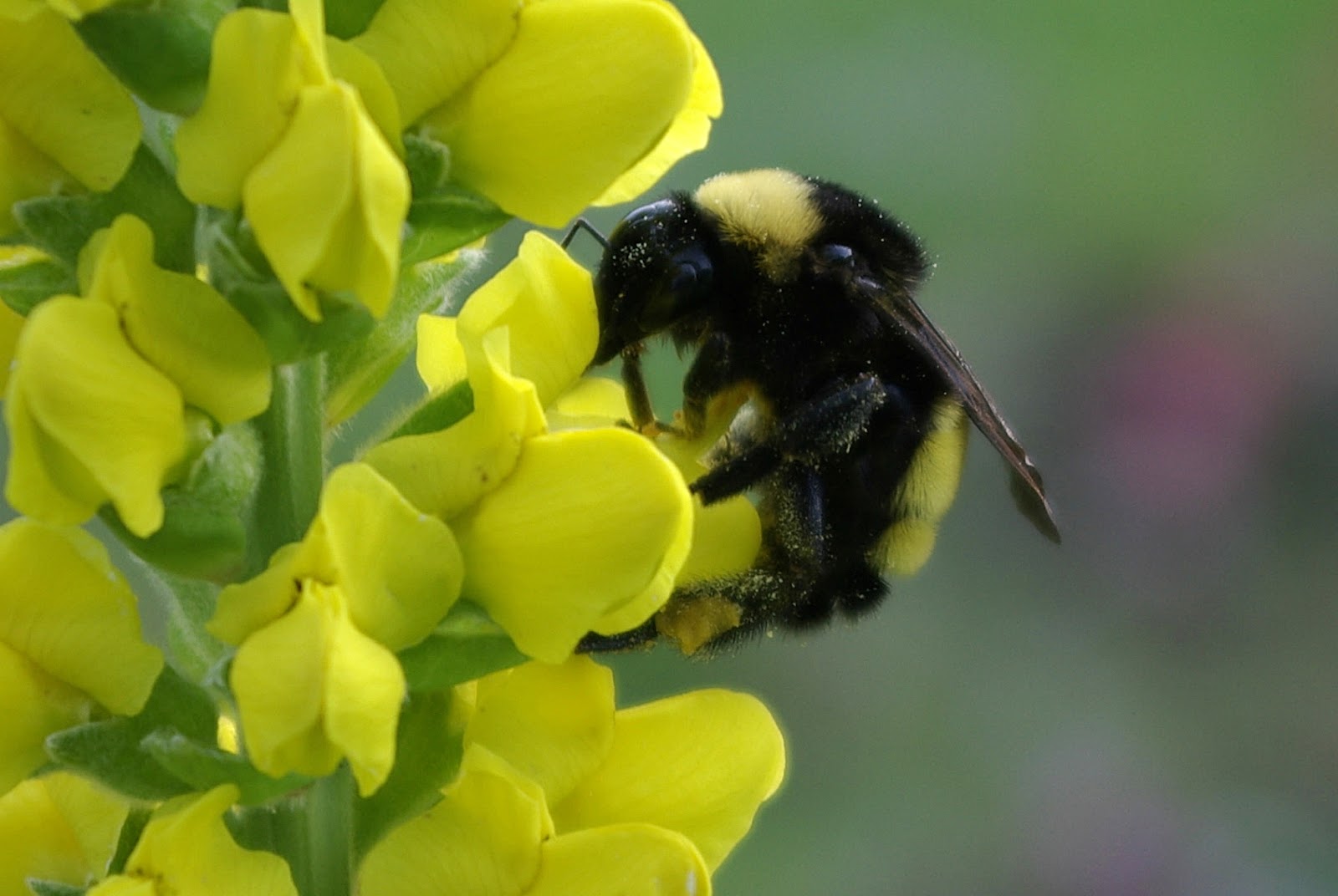
Carolina bush pea (Thermopsis villosa), a plant native to mountain balds in the Appalachian range
but performs just as well in the Piedmont. The flower stalks of this legume can get up to 5 feet high.


To be continued...


Related Posts Plugin for WordPress, Blogger...