Sunday, March 14, 2010

Ongoing Projects, Part IV


Before continuing down the hill, I want to turn to the space between our driveway and the neighbor's pasture.


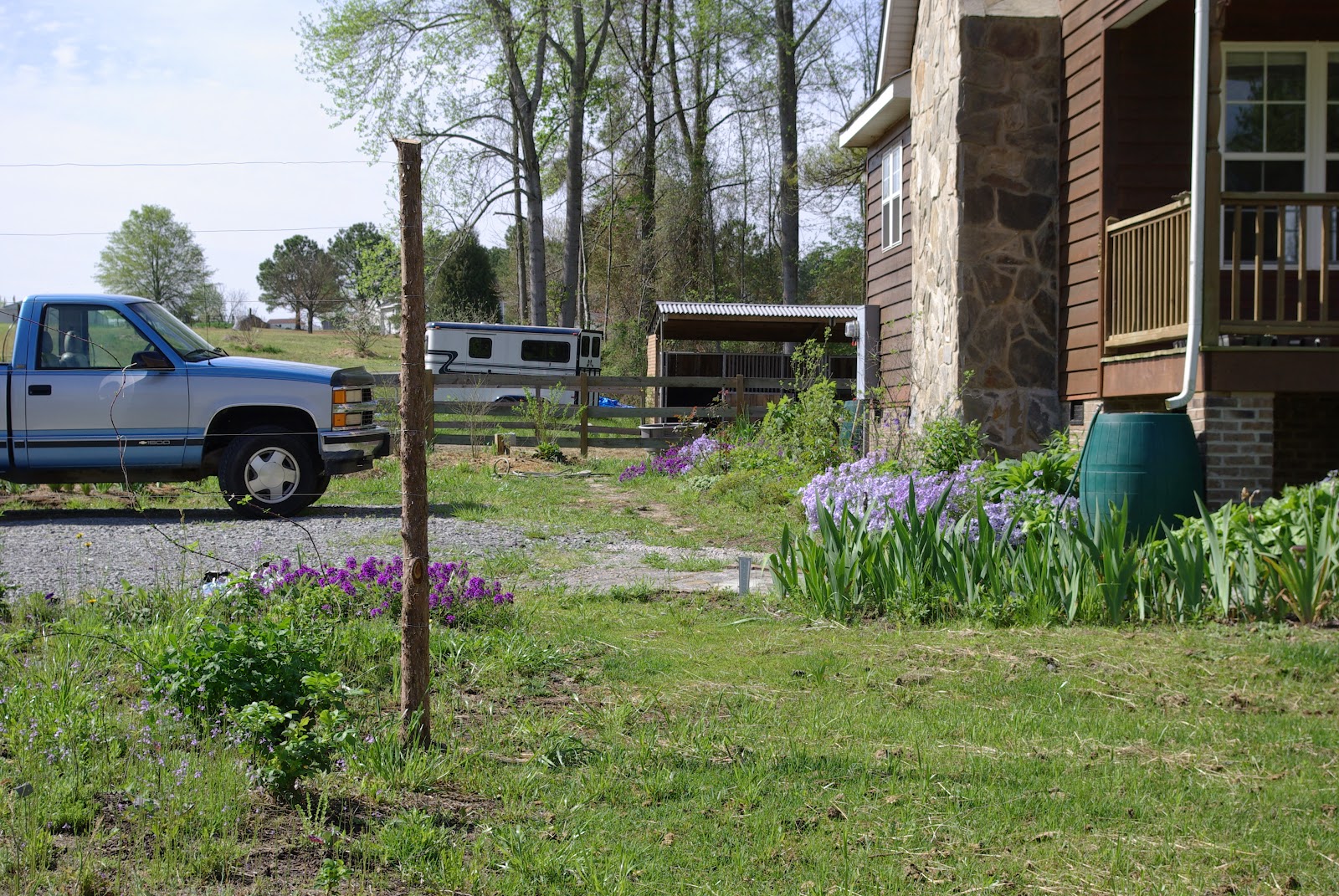
There's the slightly raised bank of the ditch, the ditch itself, then a narrow strip that widens and becomes a sloping hill past the vegetable garden. I'm using these photos from last spring because the "undeveloped" areas are in the background.


As you can see, the hill has quite a steep slope


before leveling to the bed that I put in beside the neighbor's pasture.

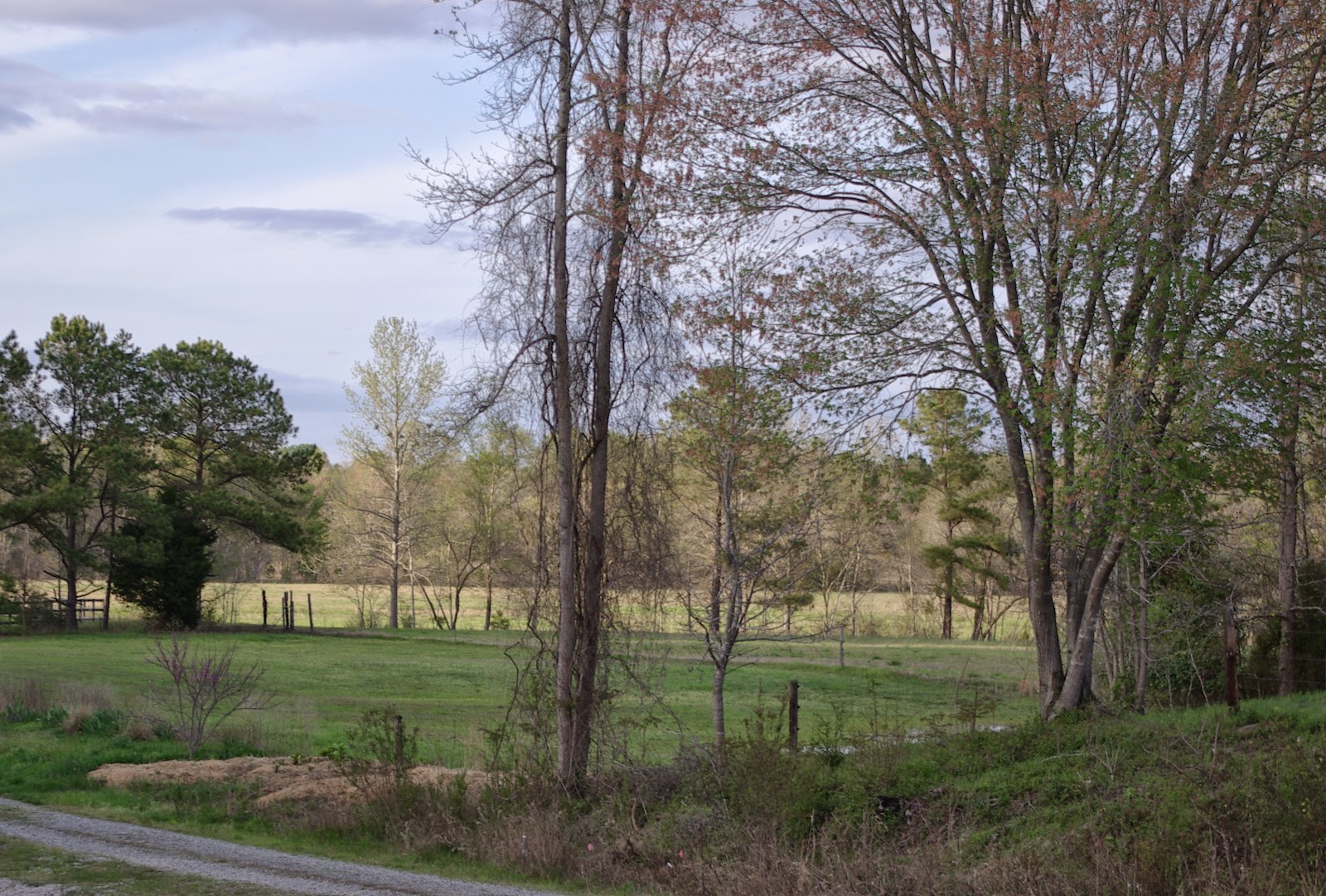
In the right lower corner, south of the young redbud, is an area that I have struggled with and have sown with Bidens seeds. It's rampant with native bamboo. Our native bamboo doesn't get that big -- rarely more than 5' -- but it's ugly and keeps coming right back up through any amount of mulch that I put on it. I would just bushhog it or mow the area every week, but the area is very uneven and has several tree trunks in it. Eventually I may put understory trees and native azaleas there.

November 2009


Because of the trees near the neighbor's pasture -- loblolly pines, sweetgums, and a large red maple the area can be classified as -- gulp -- dry shade.

Can anything grow in dry shade, you ask? Well, there's a bumper crop of Chinese privet, Japanese honeysuckle, red maple seedlings, devil's walking stick, greenbriar and poison ivy. About ten years ago the stand of devil's walking stick was rather striking, but then it became enshrouded in honeysuckle and had to be chopped down. As you can tell from this plant list, this is not completely brutal dry shade, just periodically brutal dry shade.

At the bottom of the small hill are wild highbush blueberries, sorrel trees (Oxydendrum arboreum), and wax myrtles. The sorrel trees are all rather young and the chance seedling offspring of a mature sorrel tree at the edge of the neighbor's pasture. Apparently they do not like being flooded, because they start popping up just uphill of the floodplain stake. They are beautiful trees, but from what I have seen not the easiest to make or keep beautiful. I have seen many sorrel trees on banks next to roads denuded of leaves and covered with bagworms -- on the other hand, I've also seen sorrel trees about a 100 yards off highway 40, magnificent in their autumnal scarlets and still sporting their flower bracts from spring. I've read that they can be sensitive to pollution, so perhaps part of the problem with the sorry ones I've seen is their close proximity to the road, which of course is not a problem here. Mine flower, and color in fall (often very early), but the leaves tend to spot too. They don't look perfect (and will probably get better with age), but are still beautiful and I'm very happy that they are there. The soil is quite lean where they are, so I'll probably throw some compost around them this year.


The more blueberries, the better.


In the interest of full disclosure, here is a series of decidedly un-glam shots, taken today at midday:


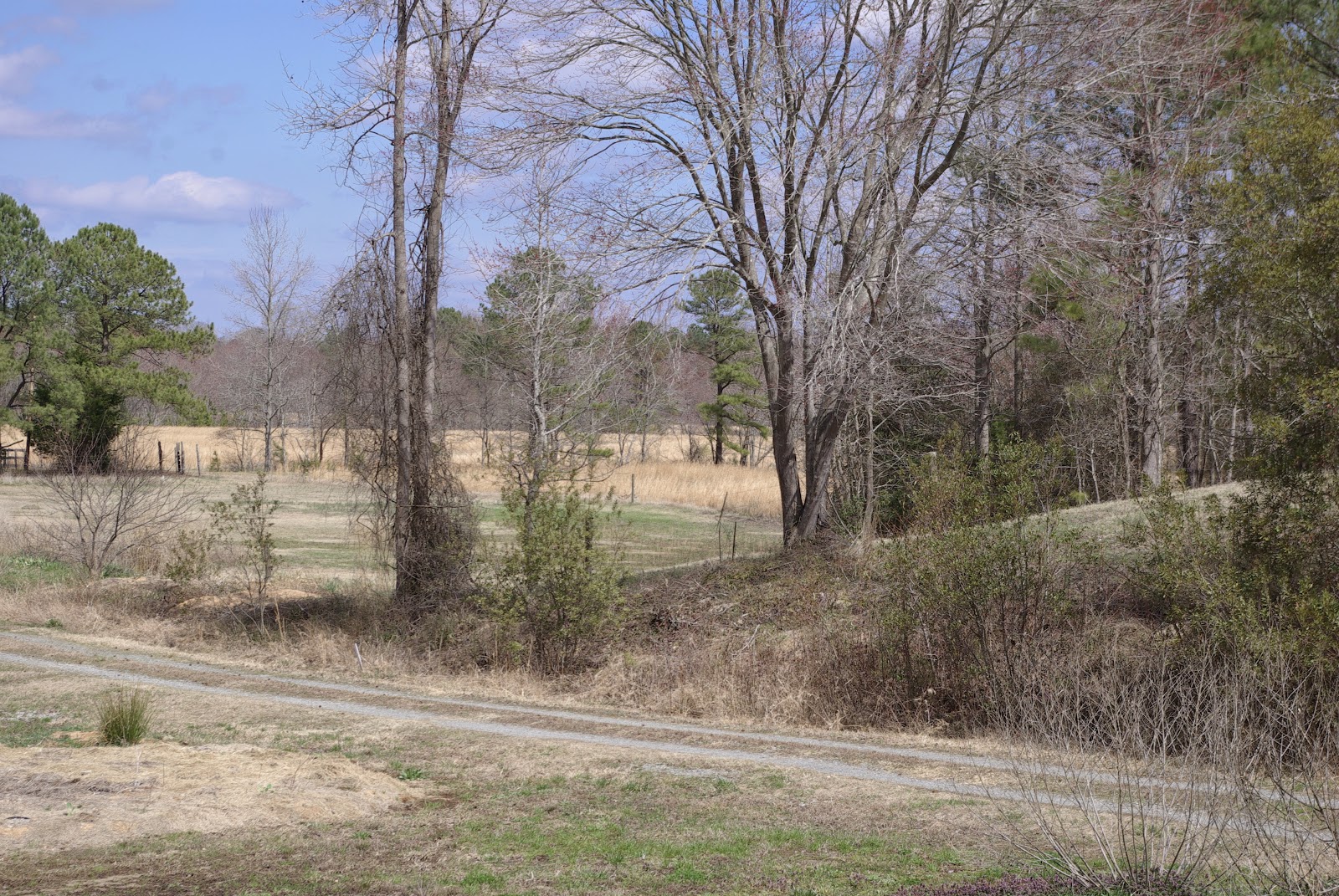

The new beds between the house and the big perennial bed, seen below on the left, will be the subject of the next post.


For the upper portions of the hill, I have some ideas:

I have tried and killed mapleleaf viburnum already (not at this location), but would love to try it again. My FIL has mapleleaf viburnum all over his forested property, and the hype about its fall color isn't just hype. It's truly extraordinary, a mix of rose and raspberry pinks and purple. Yes, you read rightly, purple. A stained glass violet-purple kind of purple.

One of those native azaleas that likes craggy places, like pinxterflower and Alabama azalea.

Rusty blackhaw (Viburnum rufidulum) and smooth sumac (Rhus glabra) -- check them out at Gail's.

More Highbush blueberries

Sparkleberry, a relative of blueberry that does not produce edible fruit, but likes it dry and has the same beautiful fall color.


Friday, March 12, 2010

Ongoing Projects: Part III, the Vegetable Garden


The vegetable garden is next to the parking area. I added a lot of ornamentals around the border of the vegetable garden last year, because a vegetable garden in midsummer in NC is not always a pretty sight.

May '09


The picture below of the garden in April '08 shows that there were ornamentals around the garden, but they weren't tall enough to act as a screen.


Last year we grew tomatoes that are healthy in our climate: Celebrity, Marglobe, Roma, and Sungold cherry tomatoes. Even so, we do not have cages that are sturdy enough to hold up the tomatoes once they get some size. In fact the only cages I've seen that are sturdy enough for the job were ones that were made by Gene's uncle, who could weld. So the the plants fall over, tomatoes are littered onto the ground, etc. I'd rather not view the carnage close up all of the time, but I still want a vegetable patch just out the door.

The tomatoes we grew last year kind of left me indifferent except for the Roma, which were excellent, so this year I'm going to grow Roma VF again and red cherry tomatoes. Tommy Toe is a good cherry tomato which we've grown before. I'm also going to try Eva Purple Ball and Druzba after reading their descriptions in the Southern Exposure Seed Exchange catalog.

Beardtongue, foxglove, daylily, Carolina bush pea and the rose Duchesse de Brabant (amazingly still alive!) in the vegetable garden border, April '08. All of the following pictures were taken in spring of '08.


The two cedar posts strung with wire are for black raspberries. I also put three climbing roses there: Sombrueil, Fields of the Wood (check out this link), and Pink Pillar. Normally red isn't a color I'm overly fond of, but a luscious red rose, just one the bluish side of pure red -- yum. The raspberries are not thornless and like to spread around, so likely some will go at the edge of the little field that's near the old house site as well.


In late winter of '08 we planted broccoli, cauliflower and cabbage. The broccoli was by far the best I've ever had. Unfortunately I do not remember the cultivar name, if it came with one. Gene picked up the plants at Lowe's. I always mean to start vegetable plants from seed in the fall and always forget. I have to admit that so far vegetable gardening has not provided enough reward for me to really get invested in it. Perhaps because I don't like to cook. (I watch Food Network a lot but that's strictly for entertainment.) In addition, I have found flower gardening to be much easier than vegetable gardening -- diseases and bugs are more of a problem with produce plants than with most flowers, or at least the flowers that keep on living in my garden. I don't spray anything, ever. So I have to put up with bugs. For a while Gene was picking the hornworms off of the tomatoes, but I told him he might not want to do that because a) they grow into gorgeous Sphinx Moths and b) in the end, they don't really affect the yield all that much, not as much as wilt diseases do. My least favorite bug is the blister beetle. At least they died out in the last drought spell we had. They were eating a lot of the vegetables and the milkweeds.

Still, since one has to eat, and even cook, the ingredients might as well be good. The best produce isn't going to be at Food Lion.

The plan this year is to plant tomatoes, peppers, and perhaps make a teepee for pole beans. We've grown Kentucky Wonder before and they worked out well. Scarlet Runner Beans are a bust in this climate, it's too hot. It's time to plant cool-weather crops like broccoli, cabbage and kale, so I may put those in too.

My very favorite tomatoes are the black Russian tomatoes, but they are not disease resistant. If we have time this year, I might ask Gene to put the plow on the tractor and plow a couple of rows in the small field near the old house site so that I can grow them there, together with some disease resistant ones.

I like spaghetti squash, but I do not want the vines in a small garden space. They end up putting out runners 15' in every direction, and when they die, they don't just quietly wither away, but die spectacularly and very conspicuously. The same with melon vines. These would need to go the same area as the black tomatoes and the extra raspberries. So far we haven't grown any melons worth eating, but Gene's grandfather grew Hale's Best muskmelons in western Wake County (one county over) and they were wonderful.


Since the vegetable garden was too open, on the long driveway side I put in 2 Veilchenblaus I got in a trade, along with a Rosa palustris scandens, Formosa lilies and seashore mallow. On the parking area side I put dahlias, rugosas, and Verbena bonariensis.


On the side closest to the house I put in rugosas at the head of each vegetable row. So there are ornamentals all the way around. The only ornamentals inside the garden is a trellis with perennial sweet pea and the rose Compassion, and a Maiden's Blush rose seedling.

A lot of water runs beside the vegetable garden during a heavy rain, so I have scattered Bidens seeds here too. I would like to add water iris and Carolina bog mint there as well.

May '09


I had lost all of my Carolina bog mint (Macbridea caroliniana) during the last couple of dry summers except for what was down by the hay shelter, but it's worth bringing back after a dry year because it's so lovely and long-blooming when it's happy. It's stoloniferous too, so if you can find a consistently moist spot, it soon spreads into a colony.

Carolina Bog Mint


Some years ago I bought an iris from Niche Gardens that turned out to be I. virginica. At its peak it forms a big bouquet of flowers and I've grown countless offspring from seed, all just like the parent.


I would like to add Iris ensata as well. These were grown from seed obtained in a trade, and until they bloomed last spring I thought they hadn't made it.
To be continued..


Thursday, March 11, 2010

I have proof!


I walked down to the slough a couple of days ago to see what I could see. Maybe I'm really ready for spring if I think that bare trees reflected in brown swamp water are beautiful, but I do. The swamp water is clean, but appears brown due to leaf litter at the bottom of the slough and tannins in the water.


And guess what I saw?? There were 4 or 5 yellow-bellied sliders sunning on a log, and when they saw me they quickly slid into the water. A pair of wood ducks who had been resting or feeding near the bank of the slough ventured out a little ways to see what had alarmed the turtles. These are not award-winning photos but heck, at least the birds are in the frame!


Check out the red eye.


In this photo the male's head is partially obscured by branches, but you can see his reflection in
the water. If you look beneath the tree on the right, you can see the female starting to come into view.


And then they're off, making the characteristic wood duck alarm call.


In this shot you can see wedge-shaped tail, one of the ID traits of a wood duck in flight.


I walked to the creek, in the process flushing that or another pair but with no opportunity to get a picture. The creek is down from the last time I was here, so that the cherrybark oak that fell over when Floyd went through is above the surface of the water again.

Overhead a pine warbler was singing and I caught a glimpse of a pileated woodpecker across the creek.

Yesterday and today the birds were really revving up. Bluebirds, brown thrashers, mockingbirds, cardinals, pine warblers, meadowlarks, red-winged blackbirds, and song sparrows (although they will not breed here) were all singing, a beautiful cacophony of sound.


Related Posts Plugin for WordPress, Blogger...