Wednesday, February 29, 2012

Gearing up the produce garden


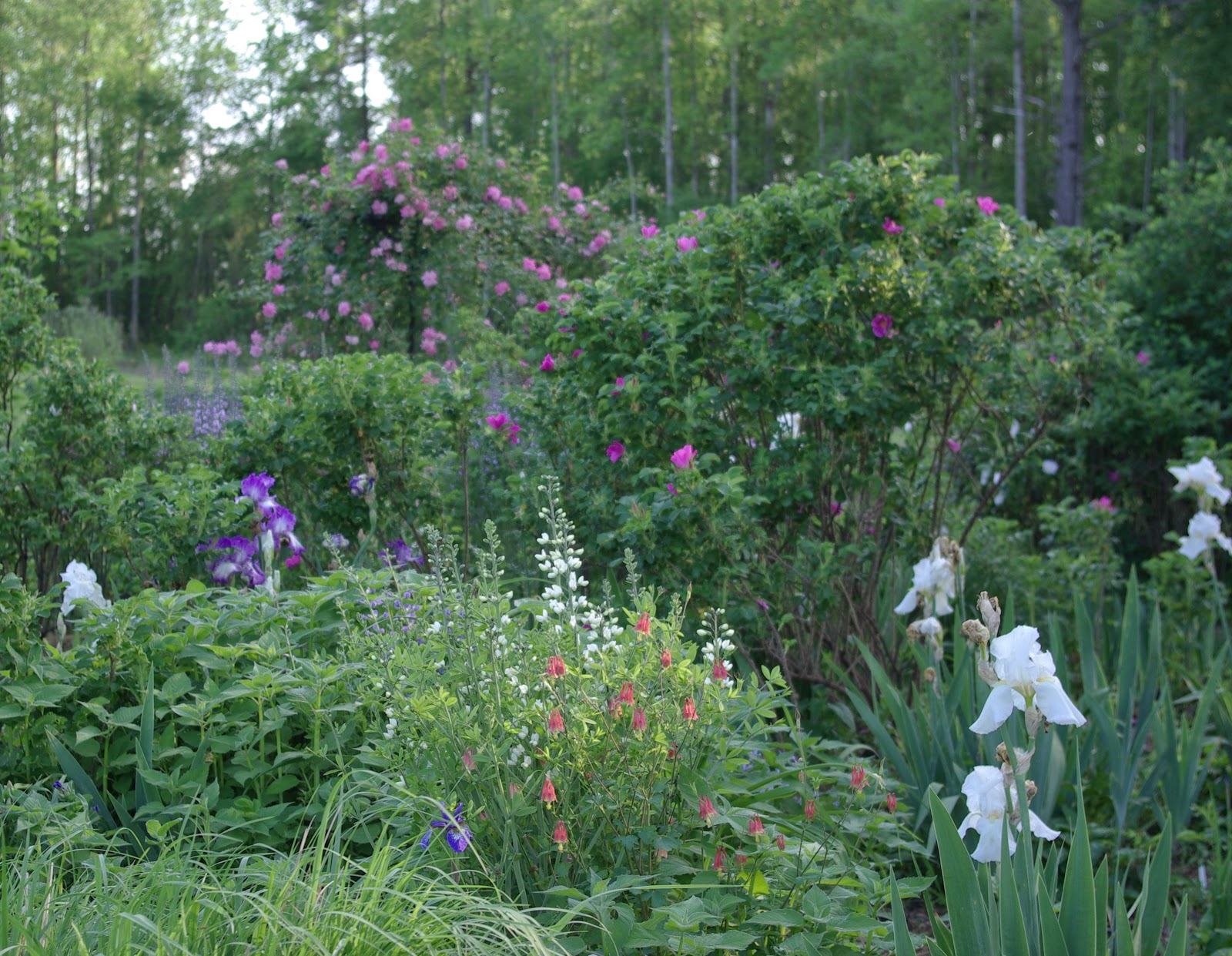
Roses bordering the vegetable garden, April 2011
 

The daffs and tommies (Crocus tommasinianus, planted in the sunken Baptisia pots to keep them safe from marauding voles) are in bloom a month early. There's even a few natives displaying their delicate flowers among the miniscule new greenery: Blue Violets, Jacob's Ladder, Woodland Phlox, and Marsh Violets.


Time to prune the apple trees. Last fall I posted about looking for new apple trees as the two we have were setting lots of fruit that was then dropping off. We're keeping the 12-year-old trees and giving them another go. It's normal for apple trees to shed some of their fruit prematurely (this self-thinning is called June drop), and perhaps the apple trees dropped all of their fruit because they were heat and drought stressed. We mulched them well over the winter and DH pruned them this year. Maybe the problem is that when I pruned them I pruned them for more flowers rather than maximum yield. lol Last fall I looked at ordering from two different nurseries: Big Horse Creek Farms in the NC mountains and Century Farm Orchards in Reidsville about an hour north of Greensboro. Big Horse Creek custom grafts trees for customers; if you order in spring they will graft a sapling, grow it up over the summer and then ship it in the fall, which is a really nice customer service. I wanted to go ahead and order some dwarf apple trees last fall so I contacted Century Farm about available trees on dwarf rootstock. From their list of a half dozen trees I picked two old southern varieties with good disease resistance, Aunt Rachel and Yates. Aunt Rachel is from Chatam County (central) NC. Fruit ripens early, late July to early August, green and red striped apples with firm juicy mildly tart flesh good for eating and cooking. Yates was developed in GA before 1860. Fruit ripens in October and is a good keeper. The tender flesh is juicy and aromatic and was historically used for cider and eating.

While some gardeners have already started their tomato seeds, I'm still deciding which ones to use this year. Last year was such a fail for our tomatoes in spite of planting them in a brand new garden patch that we're going to grow them in half wine barrels this year. I might start the leftovers seeds from last year:

Roma (determinate, Verticillium and Fusarium Wilt resistant)
Eva Purple Ball (indeterminate, heirloom from the Black Forest region of Germany)
Druzba (indeterminate, heirloom from Bulgaria)
Black Brandywine (indeterminate, heirloom)
Chadwick Cherry (indeterminate, heirloom)

I just ordered Neptune, Ozark Pink and Tropic from Southern Exposure Seed Exchange after they came up in a google search for best tomatoes/ hot summers. I want some other black tomatoes also just for taste. I love the sweet acid taste of the Black Russian tomatoes but they're not the most disease resistant tomato in the world. Still, even if I just get a few I'll be happy. I ordered seeds for Black Prince, Japanese Black Frifele, and Paul Robeson from Southern Exposure Seed Exchange. I'll probably also order the "super tomatoes" (resistant to just about everything) Bella Rosa and Fletcher from Totally Tomatoes. I will order some cherries too since they seem to be tougher than the regular tomatoes. I'm considering Black Cherry, Black Plum, Brown Berry, Purple Haze, and Matt's Wild Cherry. Any other suggestions for tomatoes to try would be welcome.

DH wanted to know what I'd like in the vegetable garden since our tastes don't always match. He likes cabbage and greens but I won't touch them. I only eat okra if it's breaded and fried, not just sauteed naked. Otherwise it's slimy, blech!! I tried looking through the Territorial Seeds catalog and while the choices looked great, I had no idea how those plants would do in our muggy heat. Territorial is out of Oregon so their recommends aren't really relevant. So I turned to Southern Exposure Seed Exchange and decided on the following:

Christmas Pole Lima Bean (I meant to order King of the Garden)
Lazy Wife Greasy Pole Snap Bean (so called because the beans grow in clusters and are easy to pick, and because the hairless pods are shiny, thus the term "greasy")
Silver Queen Corn
Kansas Muskmelon (cantelope)
Spaghetti Squash (really is as good as pasta with a good sauce)
Rose Finn Apple Fingerling potato

The Black Swallowtails requested more parsley plants please, so I ordered 2 packets of Italian Flatleaf Parsley and two packs of Bronze Fennel seed as well.


Friday, February 24, 2012

Blooming Friday ~ colors


The colors of spring...

all pictures taken in April and May 2011


Every garden scene can be improved upon with the addition of a handsome orange cat.


Happy Friday, and join Katerina at roses and stuff for more Blooming Fridays from all over the world.


Wednesday, February 22, 2012

Wildflower Wednesday


Since the natives have not yet started up at my place, for Wildflower Wednesday I thought I'd show some of the natives we saw at the NC Botanical Garden and Arb in the center of campus last spring and summer.

......cue the harp music and wavy lines...

The NCBG ~ that and living in western Pennsylvania, which is a wildflower lover's paradise ~ got me hooked on using lots of natives in the garden. Some of the natives I already have, such as Woodland Phlox and Eastern Columbine, purchased from local nursery Niche Gardens or grown from seed given out to Garden members. It's always nice to see the plants in a setting that inspired me to grow them in the first place, to see them in new combinations, and to see new plants that I haven't tried.

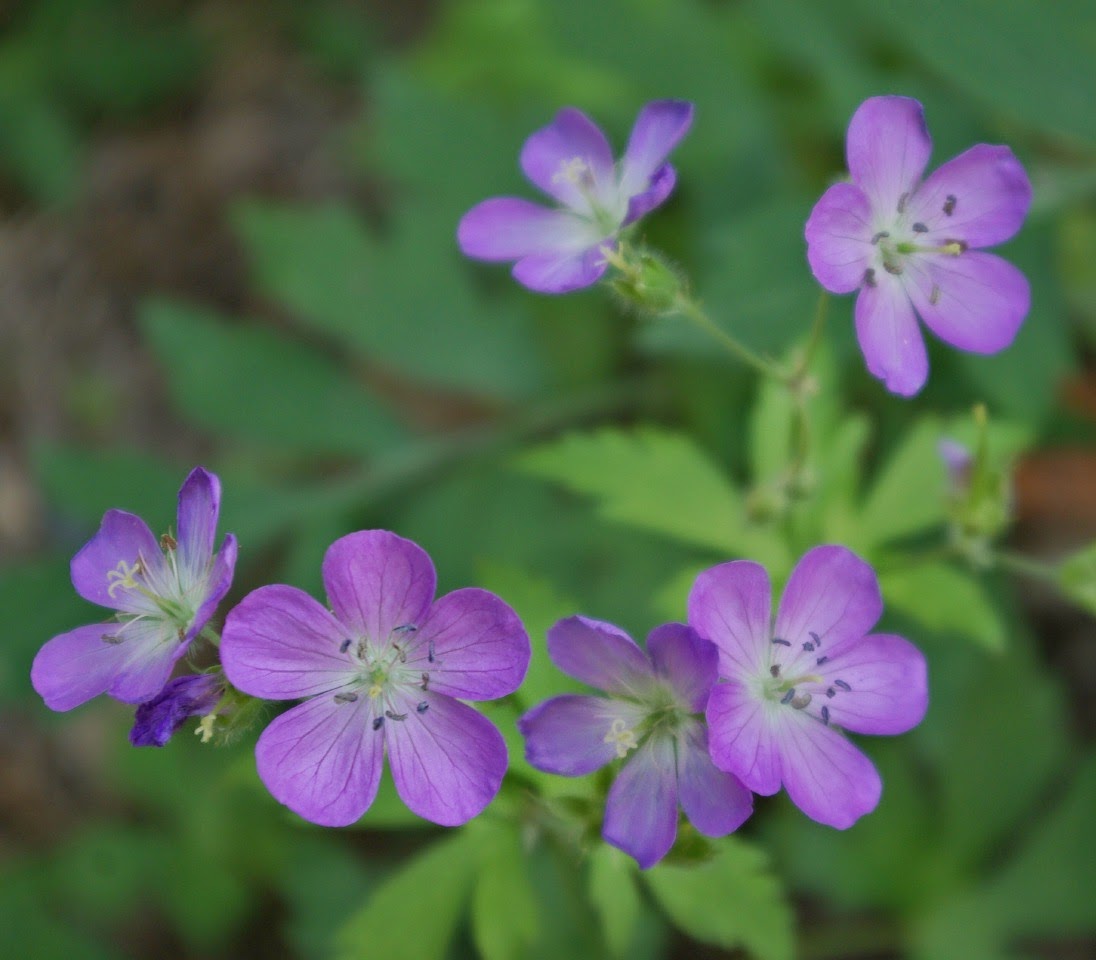
I still believe the simple beauty of our wild Geranium is the standard against which all other flowers should be judged.
 

The color is outstanding, especially in dappled shade, and the flower shape and the stamens make the flowers resemble large Hepatica flowers.
 

I don't know what it is about Thimbleweed (Anemone virginiana) that I find so appealing, but I've wanted it after seeing it featured in Native Plants for the Southeast. Here's what Sally Wasowski's got to say about it:

"...it is so vibrant that it can throw everything out of balance. On the other hand, interspersed with other whites -- white forms of summer phlox, coneflower and Mississippi penstemon -- it can produce a marvelously showy effect. Don't cut back its flowers after blooming; you'll want to enjoy its equally ornamental, fluffy white seed heads. Flowers and seed heads combine to give you about two months of color."

I got it at the Garden last year before remembering that black blister beetles eat my fall anemones every year. Maybe the Thimbleweed will bloom before the beetles get started.


Bottlebrush Buckeye is a perennial for which I'm still trying to decide on a spot. Here in central NC it appreciates some shade and I've read that it likes a rich moist soil. I've thought of putting it at the edge of the woods but it will have to do battle with blackberry briars and seedling trees and the only intervention would be mowing during the winter.

This magnificent Alabama Azalea is at the streetside edge of the big pergola at the Arboretum on the UNC campus. The most outstanding trait of this azalea for me, although it is beautiful, is its fragrance: strong, sweet and lemony, YUM.
 

American Wisteria, on the other hand ~ while I love the purple color, the fragrance seems to range from zero to male cat. I'll take the zero fragrance one, thanks.
 

Unfortunately I forgot to snap a picture of the label or the label was missing but it looks like Roseshell Azalea (Rhododendron prinophyllum), native to our mountains. I love the pink color and the twisted buds.
 

I have both an American Smoketree and two Bald Cypress but they are twigs compared to these specimens! (The Bald Cypress is the utility pole lookalike in the foreground.) Well, one of my Bald Cypress seedlings is still literally a twig, and the one that grew all the way to 4 feet after 5 years looks to have had a run-in with a deer's antlers. They were both rescued and are currently sitting in pots near my doorstep.

Onto the summer beauties...

I enjoy seeing Swamp Milkweed when it blooms at the Garden. I have it
too but if the summer is very hot and dry it may skip blooming that year.

This Joe Pye looks like a volunteer just outside the mountains section of the Garden. It must have been at least 10' tall. The Joe Pyes on my farm are much shorter, with smaller flower clusters (a bit more colorful too), very occasionally reaching 7' but more usually 4 or 5'. Different species or just differences across species?

Great Blue Lobelia and Black-Eyed Susans make a beautiful combination, but not likely one that will be replicated in my garden. Like Cardinal flower, Great Blue Lobelia acts like an annual here. Cardinal Flower and a more dainty species of blue lobelia grow wild here and pop up in various places every year and I've learned to just enjoy them and not try to cultivate them.

Blue Vervain is a lovely native that I haven't been able to overwinter. Which is strange because I've seen it growing right on the bank of a stream in 6b Pennsylvania that often overflowed its banks in winter.

Wood Sage or Germander (Teucrium canadense), a member of the mint family, likes sun or shade and a lot of moisture.

I saw a number of flowers and plants in the Coastal section of the Garden that I hadn't seen before. If ever the Garden offers plants or seeds of Scarlet Wild Basil (Clinopodium coccineum), I'd really like to try it. It grows in the Coastal Plain/ Sandhills section of the Garden and is native to AL, FL ,GA, and MS. When I googled the plant name I found that Plant Delights carries a yellow flowered cultivar and Woodlanders carries both the yellow and the red. I think it would like the dry parched sandbox conditions at my mailbox, currently home to Rosemary, Lavender, Orange Milkweed and Eastern Silvery Aster. Scarlet Wild Basil is very aromatic, more like oregano than basil but still sweet.

Don't you love those flowers? And the foliage is so wispy and delicate.

This interesting-looking aster reminds me of White-bracted Sedge, except it prefers dry woodlands rather than sunny wet places.


There was no tag for the plant below so I got a copy of A Field Guide to Wildflowers of the Sandhills Region, which told me that the plant below is Dwarf Indigo-bush (Amorpha herbacea) and it inhabits longleaf pinelands.


Eastern Sensitive-brier (Mimosa microphylla), so called because the leaves curl up closed when touched.

Sandhill Scurfpea is a wispy little legume with the tiny blue-violet pea flowers and thread like leaves.

I could not however ascertain the identity of the plant below with the fuzzy gray-green flowers or seedpods. And I saw so many species of Lobelia in the Guide I'm not sure which one I have! (It looks like the Spiked Lobelia in The Audubon Society Field Guide to NA Wildflowers, which "splitter" taxonomists may have divided into different species.) Yet the book provides much more information than conformation and is a very nice reference guide. I saw lots of natives that would be great for a dry sandy garden: Pine-barren Gentian, Pineland dayflower, Carolina Sandwort, Carolina Pineland-cress, and Savanna Elephant's-foot, and that's just for starters.


Thank you Gail at clay and limestone for hosting wonderful Wildflower Wednesday.

Monday, February 20, 2012

Still Winter


Very cold rain and even some sleet last night let us know that even though we've had it easy this year, it's still winter. Today we were back to a beautiful winter's day. Hard to capture that beauty in a photograph; the photo creates a flatness that is like but less severe that that of a cloudy day, where the Prairie Rose (Rosa setigera) is reduced to a tangled mess and the thing that stands out the most is a patch of mud. But when the sun comes out, all of a sudden the world is simply beautiful. The Prairie Rose and all of the rest of the tangled mess that is the winter landscape is filled with golden light and dancing shadows.


The stems of the other Prairie Rose (Rosa arkansana) glow crimson.
 

I don't recall Rosa palustris scandens having colorful leaves in winter before, but this year they have been colorful all winter and on fine windy days they shimmer.